Posts

Why babies die?

Image
It is very infrequent for a baby to die in late pregnancy these days because women are in good health and good antenatal care is available. However, regrettably, some babies do die, sometimes without threatening and despite women doing all the right things. Some babies die in the uterus before they are born called an intrauterine fetal death. It can happen during the last half of pregnancy or during the labour and birth, when it is known as intrapartum death. When the baby has died during labour and birth is born, this is called a stillbirth. If a baby is born alive but dies in some weeks of life, this is called a neonatal death. Many people think that stillbirths happen because of a growing or genetic problem that means the baby could not survive. In detail, this is the case for less than one in ten stillborn babies.   For as several as 6 in 10 stillborn babies, the cause of death is not known. Placental problems The placenta is the transitory organ that joins ...

How prevention of major obstetric syndromes can improve women’s health!

Image
Improvement of a technique for counteraction of obsessive pregnancy disorder from the places of single beginning dictated by transform practical issue in the fetoplacental framework, with a review of the viability by methodological models of the proof-based drug. A planned report was led among the ladies with a high hazard for decompensation of placental deficiency. The strategy for counteraction of major obstetric disorders by back to back organization of the progestagen dydrogesterone from early terms of incubation with ensuing, in the BO second 50% of growth, substitution with the radioprotector diosmin has indicated its high viability. The technique for the decision for the anticipation of neurotic pregnancy disorder in a high hazard for decompensation of the embryo (feto) placental framework is the utilization of the progestagen dydrogesterone and the angio-defender diosmin as indicated by the created strategy. The examination has indicated the capability of a focused o...

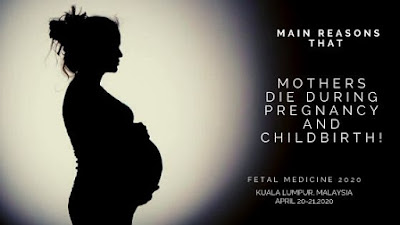
Four Main Reasons that Mothers Die during Pregnancy and Childbirth!

Image
Early motherhood risk & Unsafe Abortion Complexity during pregnancy and childbirth are the leading cause of death in young women aged 15 to 19 in developing countries, warned a report published last week. Many adolescent mothers die each year because they have children before they are physically not ready for parenthood, Overall, a third of women from developing countries gave birth before the age of 20—ranging from 8% in east Asia to 55% in west Africa. Analysis of the most recent and best quality data from government statistics for different countries or from international surveys showed that complications from pregnancy and childbirth were the leading cause of death for girls aged 15 to 19 years in poorer countries. Adolescent women face a high risk of unintended pregnancies and unsafe abortions, with devastating consequences for their lives and health. Around   world, every minute, nearly 40 desperate women undergo an unsafe abortion; at least one-fourth...

Is the Prenatal Environment that Important??

Image
The pessimistic effects of environmental exposure during pregnancy on fetal growth and children development have been confirmed. It has been found that environmental exposures during pregnancy have a great influence on the growth and development of fetus, birth outcomes and children's psychology, behavior and neural development. In this review, according to different types of environmental exposures, we focused on the key issues of the fetus or children induced by four aspects of environment exposure, including environmental chemicals, unhealthy life styles and behaviors, stress and other risk factors, and discussed the adverse effects of environmental factors on the growth and development of infants, children's psychology, behavior, social and cognitive, such as birth defects, autism spectrum disorders, attention deficit hyperactivity disorder, emotional problems, learning disorder and intelligence development and so on. We also suggested that the researches on mecha...

Preconception Health_ For a Healthy Family !

Image
Preconception Health: Preconception health refers to the health before pregnancy. Maternal lifestyle in the period prior to conception, as well as during pregnancy, is an important determinant of healthy pregnancy and normal fetal development. By the time most women have realised that they are pregnant and have taken the first contact with antenatal care, the fetal organs have already been developed. Interventions aiming to prevent adverse pregnancy outcomes related to organogenesis are thus often too late. Risk factors include insufficient nutrition, low levels of folate, overweight/obesity, medical conditions and its treatments, alcohol and tobacco use, and high age. Maternal nutrition both preconception and during pregnancy can affect growth, development and later health outcomes of the fetus. To reduce the risk of neural tube defects (NTDs) in the fetus, women are advised an intake of 400 μg folic acid daily in good time before conception and up to 12 weeks after. ...

Hope during High risk Pregnancy!

Image
High-risk pregnancies affect a notable number of women each year. Around 22% of all pregnant women are classified as having high-risk pregnancies. A high-risk pregnancy is defined as any pregnancy in which there is evidence of actual or potential threat of harm to the life or health of the mother and/or the baby because of a disorder or situation coincidental with or unique to pregnancy. Women who were suffering through high-risk pregnancies may require complex care involving lifestyle modifications, pharmacological and technical support and even hospitalization. As a result, these women may experience feelings of vulnerability because they have a high-risk pregnancy and thus be more exposed to stressful feelings. Research into the social and psychological aspects of high-risk pregnancies has focused on the concerns, stressors and needs of women with high-risk pregnancies during the antepartum period.       Who is likely to have a high-risk pregna...

The moment when a child is born, the mother is also born!

Image
What is Gestational Age? Probably people say that a pregnancy typically lasts about nine months (or 38 weeks) from the time of conception until a full-term infant is delivered. But in calculation the length of a pregnancy was decided by gestational age. Gestational age is the number of weeks that have passed since the first day of a woman's last normal menstrual period. Therefore a full-term pregnancy would be 40 weeks long. Especially in the early stages of pregnancy, a physician can confirm the gestational age of your pregnancy through a physical exam and ultrasound. What is Conceptional Age? The first trimester is defined by conceptional age. Gestational age is not the equal as conceptional age. Conceptional age is the time has passed since actual conception (fertilization). Conception cannot take place until you ovulate, and that typically happens about 14 days after the start of your monthly period. So, conceptional age is always be about 14 days younger tha...